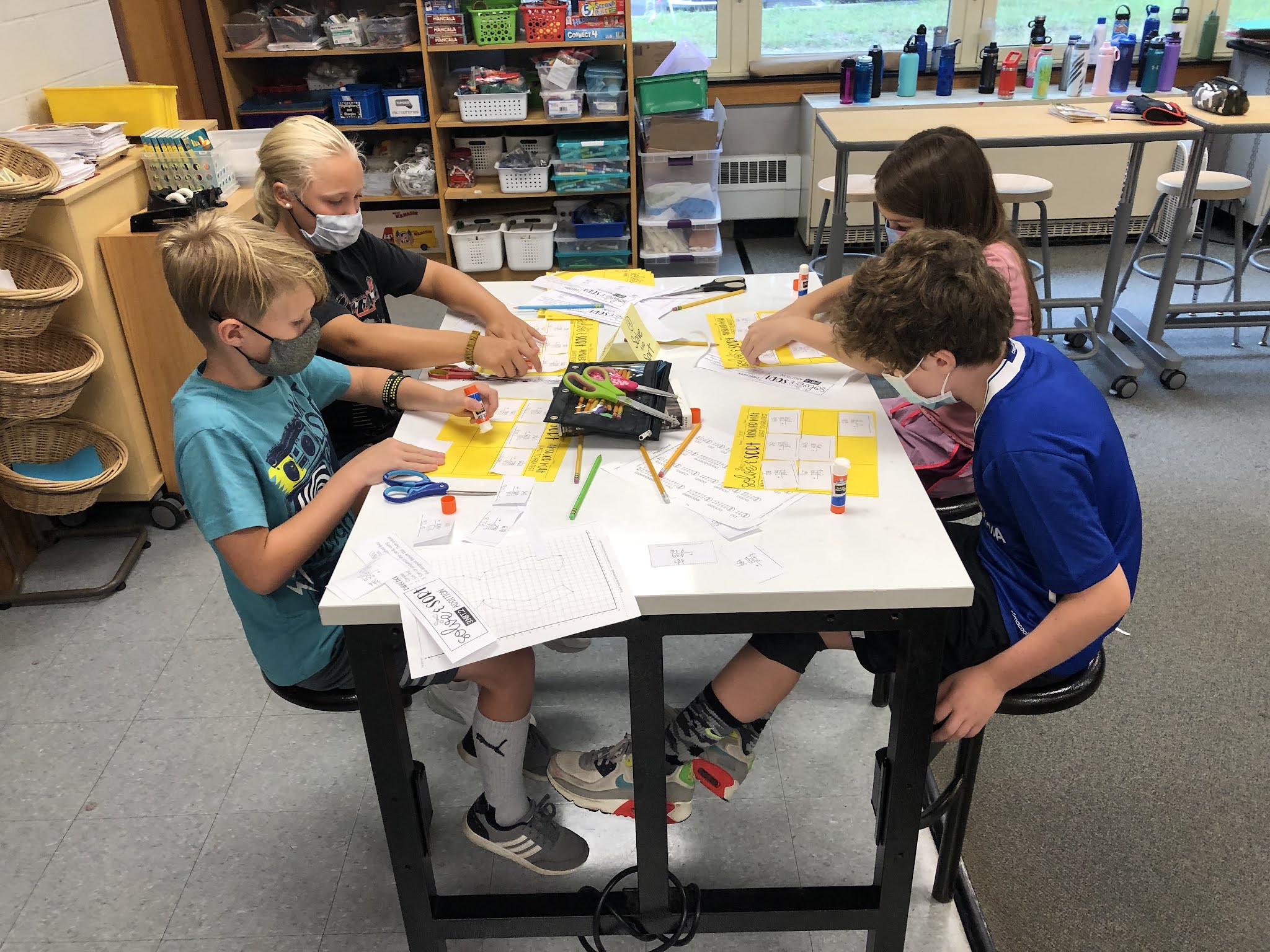
Friday, September 17, 2021

The Value of Listening


Listening is a fundamental aspect of developing strong interpersonal relationships as well as a meaningful understanding of the world around us. We often find ourselves distracted or overwhelmed which can impede our ability to truly listen and understand one another and purposefully process the experience of learning and life. 

As we work toward developing the key skills, competencies, and dispositions that learners need in order to achieve success in school and in life, we took some time this week to focus on the value of active listening. To promote the value of this important skill, students were partnered with a classmate and engaged in a dialogical interview. Dialogical interviews focus less on making the interviewer's opinions and ideas heard and more on the thoughts and ideas of the interviewee. The purpose of this exercise was to offer students a meaningful opportunity to practice and develop their active listening skills, as well as to continue their important work in developing trusting and caring relationships within our classroom community and bolstering a mutual understanding of one another. Though at times the experience proved to be a challenge for some our learners, they were eventually able to successfully redirect their thinking and engage in meaningful moments of understanding and empathy. 

Listening exercises like this will be an essential part of the work we're engaging in as they help to develop skills that promote empathy, effective collaboration, that allow learners to absorb knowledge, be curious, develop a deep understanding about what they are learning about and experiencing, foster critical thinking, better communicate their ideas, support meaningful discussions about text, and allow learners to see and experience the value of diverse perspectives and creative approaches to problem-solving.

This week's guest bloggers reflect on their listening experience. Enjoy.

Listening is a really important skill in life because you have to really listen to others if you don't want there to be a lot of conflict in the world.  - Lonnie

I think 6 out of 10 kids are distracted listeners. - Cheeto111

When you listen, you just need to turn your mute button on and listen and learn from the person you are with.  - PickleKitty

Listening is about empathy, understanding, and digging deeper. When you listen to someone, you understand more about them and it opens up your own ideas about things.  - TheBeeGuy101

Listening is sometimes hard for people because some people want things their way. In life, people sometimes have their hearts set on what they want to say and not about listening to the other person. A wise man is a man that listens to others.  - Lightning24

It's important to learn to be an active listener and not a distracted listener. It's important to listen to other people's ideas and thoughts and not just your own.  - EarthySmurfy

Listening is important because you can learn a lot of things about someone if you just listen. If you have a great idea, you don't want to focus on your own idea, but you should listen to the ideas of others. Who knows, they could have a really good idea and your project could be even better.  - Kiwi222

Listening is important because you are giving other people a chance to share their ideas. Listening is also about respect.  - Strawberry

When you listen to someone, they will know if you are really listening.  - Dream

Listening is an important skill to have in life. Listening shows that you are being respectful and that you care. Even if listening is something that you struggle with, you should work at it.   - Galaxy

Listening is an important skill and it can be hard. You can learn a lot of new things from listening to someone and you can understand someone better.   - Ham

You can learn a lot about other people when you listen.  - Koala333


Friday, September 10, 2021

Welcome to a New School Year!

Students are settling in quite nicely and are already experiencing that feeling of being part of a strong and special community. Those first day jitters are evolving into smiles, laughter, and a sense of comfort and belonging.

We've carefully and deliberately spent our first days of school not just establishing routines and expectations, but more importantly, creating a classroom that is built on community; where students recognize and celebrate shared goals and experiences, who are learning to trust one another, feel empowered to contribute, and who feel understood, valued and capable. Those important traits will be nurtured all year long as they provide an essential foundation for enabling teamwork, cooperation, communication, flexibility, creativity, critical thinking and problem-solving skills to develop.

We asked students to reflect on their experiences over the last several days and write about which ones they found most meaningful, which skills they nurtured in the process, and why and how those skills are important. Here are a handful of reflections from this week's guest bloggers. Enjoy.

My best learning experience this week was creating the Habits of Mind model. My team had to learn to share our ideas and work together. It was hard, but I learned how we could work together better and to create something together. - Polly  

My best learning experience this week was the Habits of Mind challenge. I needed to work with my team and listen to other people's ideas. Learning those skills is going to be important in the real world because you have to use those same skills in any job you are going to have.  - Chickadee

My best learning experience this week was the Habits of Mind challenge. We needed to work as a team and help each other. We also needed to talk to each other. By talking to each other, there were no fights over things and each of us would not do the same thing. We have to be able to share our ideas and talk to each other for the rest of our lives. Being a team player is important.  - Pineapple

My best learning experience this week was making the model for the Habits of Mind challenge. An important skill that I used was sharing ideas with my team. That was important because when we shared ideas, we did not argue or fight and we listened to each other.  - Lightning24

My best learning experience this week was learning about meditation, releasing stress, and calming my body. I definitely had to have a growth mindset about this and learn how to settle myself. When I am calm, I can be more independent and a better team player.  - Recycle14

My best learning experience so far this year was working in a group to create the Habits of Mind model. It was a fun challenge. Some important skills I used to complete this project were teamwork, responsibility, cooperation, and kindness. We will need these skills in life because anything could happen. Teamwork is always useful in any type of group situation whether you are a grown-up at work or a kid at school. Teamwork is always key.   - WowWriter

My best learning experience this week was building the Habits of Mind models. Some important learning skills that I needed to use in order to complete this activity were creativity, friendship, and communication. That is how we were able to make it work. Being creative and kind are important life skills.   - EarthySmurf

My best learning experience this week was creating our Habits of Mind model. We had to use teamwork, creativity and patience in order to complete it. Those skills are important because you are always going to have to work with other people in life and those skills help you to work together.  - Cheeto111

My best learning experience so far has been working with other classmates, not just my friends. It was good to hear other people's ideas.  - G-MONEY

My best learning experience so far was when we made cool structures for the Habits of Mind challenge. We had to be flexible and we had to share our ideas and listen to each other. That is what helped us be successful.  - Swagger25


Friday, March 6, 2020

Keeping It Real

While our learners certainly dedicate loads of time mastering fundamental math algorithms and formulas, it's equally important that we provide them with opportunities to apply their knowledge and understanding of these skills in real-life math scenarios. Designing learning experiences that model mathematics pushes learners to think deeper about math, allowing them to see the connections and offering meaningful context for their learning. As we often say in The Hive, "We're keeping it real". The goal of our math learning experiences is aimed at doing just that and this week's guest bloggers are excited to explain the value in it. Enjoy.

The importance of connecting math to the real world is HUGE! For example, let's say your pizza parlor is too small and a line of people going all the way around your restaurant waiting to buy your pizza. People wait in line for hours to have your pizza, but this isn't necessarily good for business. You decide to hire an architect to design plans to remodel your restaurant to make it twice the size it is now. The architect would have to use his/her understanding of multiplication and fractions to convert the measurements to two times the size. We did this in class and I remodeled my restaurant to six times the size. This experience showed me how to use the math skills I have learned and how I might use them in a real-world situation.    - "Tazer"

Every single job out there involves math in one way or another. It's important to learn math skills when you are young and have a chance to apply the skills in a real-world situation because if you are looking to get a job, but have no experience with real-world problems, you probably aren't very qualified for the job.   - "Glisten"

Connecting what we learn in math to the real world is important. For example, if you have to bake something for a party and your recipe won't make enough to feed all of the people at your party, you would have to know how to double or triple the recipe so that you will have enough for all of your guests. When we learn how to multiply fractions in the classroom and have a chance to use that knowledge in a real-world situation, it helps us see how important it is for us to learn these skills and how we actually might use them someday.     - "Rianna!"

Every job you do has math in it and if we didn't learn the connections between math and real life, we wouldn't know what skills we'd need to use in certain situations. I think connecting math to the real world is really important and that all schools should teach kids how to make these connections.   - "Mala!"

Imagine you were an architect and the owner of a restaurant wanted you to double the size of his restaurant. You'd have to do a ton of math to figure out how to do that, including multiplying some fractions. I tripled the square footage of my restaurant and had to use my knowledge of multiplying fractions by whole numbers - it was a whole different story!   - "Drain"

My pizza fraction project showed me how math is used in the real world because I had to multiply fractions to make my pizza restaurant bigger. If I didn't do the math calculations correctly, my restaurant would not be safe enough to open (it could collapse!). This was a fun project and I could definitely see the connection to the real world.    - "Lam"

Math is everywhere, so making real-life connections when we're learning new math skills is really important. Even though I didn't choose the pizza parlor project, I can still understand how it connects to the real world. Knowing how to multiply fractions and how you might use that skill is very important.     - "Ritzi" 

The importance of connecting math to the real world is huge because if you know the answer to a simple math problem, that's great, but if you can figure out how that skill can be used in a real-world problem, then that's one of the best math skills you can have. It was crazy for me to see the math connection with multiplying fractions in our pizza projects. - "N.A.S.A."

It's important to apply your knowledge of math to real-world problems because if you're just sitting there absorbing information and never learning how to apply that knowledge, it renders that knowledge useless.    - "Champ"

Being able to use our math skills in real-world situations is really helpful. For example, if I'm planning a party and using a recipe that only serves five people and I'm going to have 10 guests, then I would need to know how to double my recipe (or multiply fractions). People who bake or cook a lot probably do this all the time, so learning how to multiply fractions would help people know how to do this.  - "Lize"


Meaningful Mathematical Discourse

When we take the time to engage in meaningful conversations (productive dialogue) about our math experiences and encourage students to parti...