Friday, November 22, 2024

Meaningful Mathematical Discourse

When we take the time to engage in meaningful conversations (productive dialogue) about our math experiences and encourage students to participate, we're nurturing a supportive culture of questioning, reflection, and understanding. 

One of the key factors in math achievement involves supporting math language development. This includes asking critical questions, encouraging students to seek clarity, and accepting our failures as opportunities for real growth. In doing this, we're motivating and encouraging students to work together to facilitate productive mathematical conversations. Engaging in meaningful mathematical discourse offers students an opportunity to reflect on their math knowledge and understanding, make connections with prior knowledge, identify patterns, hone in on their reasoning skills, and develop their higher-order thinking skills. As teachers, it allows us to observe and evaluate their mathematical understanding and development so that we can better support their math growth as we address gaps in student understanding and refine and redirect their approaches to reasoning and problem-solving.

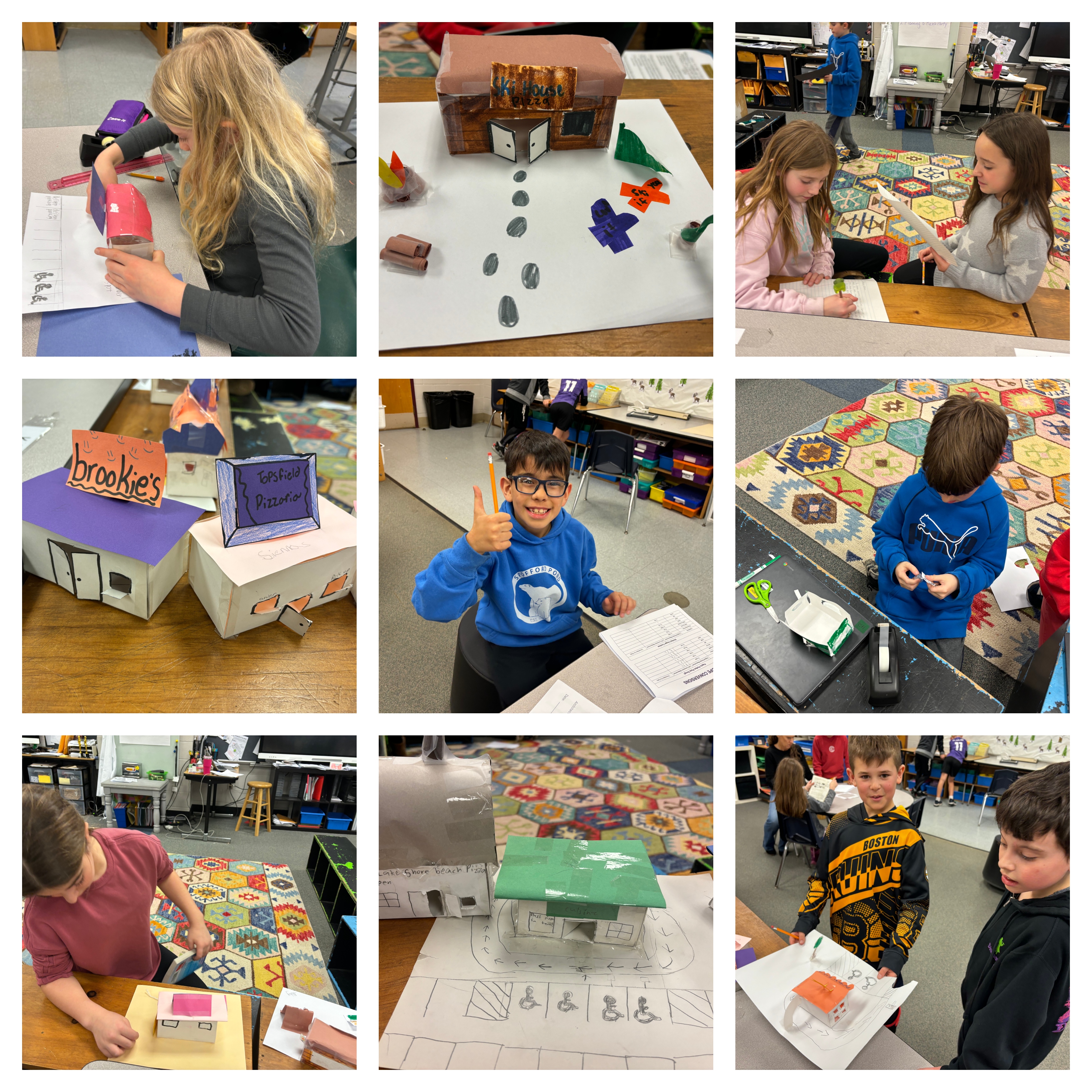
Students are enjoying the opportunities to present their ideas and mathematical strategies to one another. As they seek out, listen to, and value the ideas and perspectives of others, they are able to maximize their own learning while supporting the growth and achievements of others. This is one example of what taking ownership of mathematical knowledge looks and feels like in The Hive. 

This week's guest bloggers reflect on these experiences. Enjoy.

When we have conversations about math, I think it helps us improve in many ways. One way is that we share strategies. Let's say somebody didn't understand multiplication the way we were taught, but then the teacher shows the class another student's work. Maybe that student did it another way that makes more sense to you and now you understand multiplication better. Another way is just the conversation itself. If you don't understand something, you need to raise your hand and speak up. If you do, maybe the teacher will answer your question and give you a better understanding of math.     - @Shrek_Dog

Our conversations about math help us improve our understanding. One way is when someone gets an answer that is different from yours, you can check your work together. Another way is when you have a multi-step word problem or a very challenging question, your classmate is there to help.      - @ShreksBigMac123

Our conversations about math help us improve our understanding of math because when somebody doesn't know how to do something in math and they are too shy to speak up, the conversations we have help us to understand.    - @LouiePony

Our math conversations improve our understanding of math. For example, when someone has absolutely NO idea how to do a problem, and someone else has a really good strategy to help solve that problem, it can be helpful. In a group discussion, we can share our strategies and improve our understanding of math.    - @Preppy_Shrek3572

One way we can understand math better is by working together. We can help the people that need help and do equations together. We can also ask questions during our group conversations or with classmates to deepen our understanding of math.    - @JustinJefferson18

Our math conversations are helpful. One reason they're helpful is that we can share strategies with each other. Another reason is that we can explain each other's mistakes.     - @Bassy

Our conversations about math help us improve our understanding of math. If you have a question because you don't understand something, then you can get an answer to your question and you will understand something better and improve. If someone shares a strategy, that strategy might work for you. Conversations make a difference.     - @MustardMan1

Our conversations in math helped me improve a lot. Math can be really hard sometimes if you don't get it, but you only need a group or partner to talk it out with and ask questions. For example, one time I was at a table and we were having a discussion and solving problems together. I didn't understand one of the division problems, so I asked a person in my group and they explained how to do it. After talking it out, I finally understood. If you don't know something, don't be afraid to ask. Someone will hear your question and answer it.     -  @ILoveCheer123

Our conversations about math help improve our understanding of math because talking or sharing always helps. What if someone doesn't understand what the teacher is saying? Sharing ideas would probably help. Trust me, it's happened to me before.    - @BabyDiggs

Our math conversations help us improve our understanding of math because it is two or more people putting their heads together to achieve success. For example, you can check answers with your partner to make sure you answered the question correctly.     - @Pookie2.0

Our math conversations help us improve our understanding in many different ways. One way is that we can ask questions. For example, some of us have good questions that help deepen our understanding.      - @Ritz159

This week, we had some great conversations about math. We shared our strategies and tried to make sense of the numbers that we were working with. It was hard, but fun with trying to get the numbers right.     - @FortniteGuy#1

Our conversations about math help us improve our understanding because by talking about the things we don't know or changing the way you're saying it or teaching it, will help make sense of it.      - @Dip-n-Dots

Throughout the year, our class has had a lot of conversations about math in the honeycomb. I have learned a lot from my classmates and how we share strategies with each other. It's important because everyone's ideas have helped me improve in math. I now use some of my classmates' strategies.      - @NuggetDiddy

Our conversations about math help us improve our understanding of math because when talking about math as a group, it sometimes answers your questions and then you will know what to do. Also, having a partner to work with during math can help you check each other's work and make sure you have it right.     - @ILoveGymnastics27 


Friday, November 15, 2024

Young Voters In Training

Students in The Hive have spent the last couple of weeks learning about the U.S. election process, with a particular focus on the presidential election process. It was an exciting and memorable month leading up to Election Day. We hope it sparked some interesting and meaningful conversations around your dinner tables. We can tell you that the spark was surely alive in our classroom!

Learning about the U.S. election process is crucial for fostering civic responsibility, understanding government structure, and developing critical thinking. It equips our youngest generation with the knowledge of their rights and duties within a democratic society, encouraging them to become active participants in their communities. Students learned about the importance of voting and how elections impact their lives, promoting an early appreciation for their role in democracy - for their role in our Constitutional Republic. Discussions around elections and governance introduced students to diverse perspectives, nurturing respect for differing opinions and the value of dialogue. This foundational learning experience not only prepares them to be informed voters but also instills a sense of duty toward participation in democratic processes. By connecting classroom learning with real-world events, it also enhances their interest and awareness of national affairs, laying the groundwork for a lifetime of engaged and responsible citizenship.
Students not only actively participated in our deep classroom discussions, posing some thoughtful questions and ideas of their own, but they also enjoyed a tour of the election polls at the Boxford town hall just before Election Day AND participated in a mock election experience. We asked students to reflect on our discussions and their experiences for this week's blog. We think you'll agree that their reflections demonstrate a healthy curiosity and the beginnings of active civic engagement. For some students, learning about the election process has even inspired a potential future in public service!

One question I still have about the presidential election progress is why does the electoral vote matter more than the popular vote? I ask this because what if the president won the electoral vote, but not the popular vote? Wouldn't the people want the president that was elected by the majority of the people? - @Preppy_Shrek3572

I learned that the first presidential candidate to get to 270 electoral votes will be the president, but they have to wait a few months to actually become president. - @NuggetDiddy

If you don't vote, the person you want to win might not get enough votes to win. - @Boo0134

It is important to vote because if a president is to make things right for the people, you should support them by voting for them. Otherwise, a president that won't do the right thing might get elected instead. - @bassy

One interesting thing that I learned about presidential elections is how a candidate wins. I used to think that whoever earned more votes wins, but it turns out that you actually have to earn 270 electoral votes. - @BabyGronk

I still have a couple of questions/thoughts about presidential elections. First, it doesn't make sense that one candidate could win the popular vote and another could win the electoral vote. Why does it usually come down to Democrats vs. Republicans? - @Guy-Alpha-Chad

I learned that the winner of a presidential election is not found by the majority. For example, if Maine was mostly voting red, then all of the electoral votes for Maine would go to the Republican candidate. The candidate who earns at least 270 electoral votes wins. - @DipLover100

I learned that you have to be at least 18 years-old to vote and that you have to have at least 270 electoral votes to win a presidential election. You don't need to win the popular vote - you only need to win the electoral vote. - @solo1235

Even though you don't have to vote, you should. Your candidate has a better chance of winning if you vote. - @GordonRamsey

It is important for U.S. citizens over the age of 18 to vote in all elections because if you are responsible enough to get a driver's license and a job, you are responsible enough to do your research on the candidates and vote for the best one. - @DeadPool

It is important to vote when you turn 18 because the person that wins an election will decide if your taxes will go up or down. - @Football

One of the more interesting things I learned about the presidential election process is that a candidate who wins the popular vote doesn't necessarily win the election because you actually have to win the electoral vote. Electoral votes are given to a state based on how many representatives they have in the House of Representatives. - @PeanutGuy125

It is important for U.S. citizens over the age of 18 to vote in all town, state and federal elections because if you don't vote, it means you don't have a say in anything. If you want a certain candidate to win, you have to vote. - @LouiePony

Something new and interesting I learned about the presidential election process is there are popular votes and electoral votes. I used to think that whoever won the popular vote won the election, but you actually have to win the electoral vote to win the presidential election. - @queenbee10

I learned that people running for President fly to many different places around the country to campaign for votes. The more places they visit, the more likely they are going to win. - @BombasticSigma

I learned that you don't need to win the popular vote. You only need to win the electoral vote. You need at least 270 electoral votes to be President. You also have to be at least 18 to vote. - @TacoBell

Learning about the U.S. election is the funnest thing I have learned in a while. I learned how the electoral college works and how presidential candidates get elected. I loved playing the game ELECTION NIGHT! and I also like voting in class for our "candy-dates" (candidates). - @Pookie2.0

It's important for U.S. citizens over the age of 18 to vote in all elections. One reason is that it's important to help the person that you want to get elected. Another reason to vote is that you will have a better four years of your life if your candidate wins. - @FortniteGuy#1

I learned that you aren't forced to vote for a Republican or Democrat candidate. You can also vote for an Independent party. If you do your research, you will learn a lot about the candidates. - @Angel232

It is important for U.S. citizens over the age of 18 to vote in all elections because it is important to have a candidate that will represent what you want. - @Lucky2BLefty

I used to think that whichever presidential candidate gets more votes wins, like a normal voting process, but that isn't how it works. First, a candidate has to get enough electoral votes. The number of electoral votes for each state is based on the population of each state. Popular votes don't really matter, only the electoral votes do. I also learned ballots sometimes have questions on them. When our school had our mock election at Town Hall, we had a ballot question (Should recess be scheduled before lunch). I thought it was cool that they had a ballot question for us! - @ILoveCheer123


Friday, November 8, 2024

With Gratitude

This weekend, we honor our nation's veterans by remembering their service to our country and thanking them for their tremendous self-sacrifice. We spent time learning about the importance of this holiday and what it truly represents.  

Here's the thing: Most of us won't ever have to pick between our lives and what we love the most, like family and friends, but we all have a choice to care deeply about something - something greater than ourselves. Veterans are heroes. They show us that living a great life means being ready to take chances - believing in things, staying committed, and loving others, even if it means taking some risks. Today and every day, let's choose to honor our veterans by choosing to live for the things that they would die for: for our families, for one another, and for our country; for freedom, for justice, and for peace.

Students in The Hive wrote some very heartfelt letters to veterans expressing their gratitude and respect for their selflessness and sacrifice. These letters will be delivered to the American Legion Post 227 in Middleton this weekend. For those of you who are interested attending Boxford's Veterans Day ceremony, you can find details below.


Friday, November 1, 2024

Seeds of Change

This week, students engaged in a meaningful service-learning experience at Landsake’s Farm. There was a lot of work to do to help the farm prepare its fields for winter and the kids were ready to roll up their sleeves and get to it.

Students pulled irrigation drip lines and rocks from the fields, mulched rows of flower beds to protect them from harsh winter weather conditions, and filled sandbags to anchor the greenhouse and keep the garden fabric in place. Each of the farming tasks taught them valuable skills such as teamwork, responsibility, and problem-solving. The experience not only allowed students to understand agricultural practices firsthand but it also helped them further develop their relationship with nature while fostering an appreciation for the environment and stewardship. These types of service-learning experiences are designed to emphasize what it means to “give back” while offering students an opportunity to see the impact of their work in the community, fostering a sense of belonging and civic responsibility.

This week’s guest bloggers share their reflections on this experience. Enjoy!

There are so many reasons to support our local farms. One reason is that farms feed people. If we don't support and donate to farms, they won't be able to grow crops. Without fruits and vegetables, farms would have to shut down and some people might not be able to get food anymore. Another reason is that farms have fresh food. In grocery stores, for example, some of the fruits and vegetables could be from far away places, which means they are not as fresh. Buying food from a farm means you are buying fresh food.      - @Shrek_Dog

Something new that I learned from our farm experience is that you have to put cardboard over the soil in the fields. The cardboard stops the roots from growing. If you didn't put cardboard over the soil, the roots could still grow and turn into a tree in the middle of a field. You can't use plastic to do this because plastic will not hold the roots in place.      - @Angel232

Some of the ways I contributed to the jobs at the farm were pulling the drip lines in the pepper fields so that the farmers could put in new drip lines next season. I also picked up rocks from a different field so that next year's plant roots will be able to grow easier. Finally, I went to the flower field to put mulch on it to keep water in the soil and to keep the plant roots warm over the winter.     - @PeanutGuy125

I learned some new things at the farm. First, farmers have to take out the irrigation tubes and put in new ones each year. I also learned that dried leaves and pinecones in a mulch pile will decompose and produce heat that can cause a brushfire.       - @Guy-Alpha-Chad

Farming is an important job. Have you ever gone to a farm, picked a strawberry, and ate it? It's really fresh. That's because it's not shipped or doused in chemicals. Local farms naturally grow their fruits and vegetables. Also, when farmers plant seeds that grow into plants, sometimes those seeds can spread, which makes more plants grow.     - @JustinJefferson18

It's important to support our local farms so that we can keep them running. Farms provide food for our neighborhoods.     - @SnoopDog

One way that I contributed to Landsake's Farm this week was when I filled buckets of mulch and put it on top of cardboard that was laid down to protect the seeds and plants. I did not think my hands would get that dirty! I also helped fill some sandbags. We put the filled sandbags against the greenhouse to hold it down.     - @SkibidiSigmaGOAT


Friday, October 18, 2024

Experiment, Fail, Learn, Repeat


Fourth-grade students in The Hive have been learning about how the internal and external structures of plants and animals function to support their survival, growth, behavior, and reproduction. We took the topic a step further and asked students to explore its meaning and relevancy as it pertains to humans and the world around them.

Learning about the basic structures, functions, and adaptations of the human body (like opposable thumbs, skin, and the heart for example) was the perfect introduction to this topic. Students learned about the functions of these structures and how they support our growth and survival. Ask them about their experience with our heart rate lab, complete with stethoscopes!

Students also participated in a honeybee exploratory lab to learn more about the structures of honeybees and how they function to support survival, growth, and reproduction. There was so much to see and understand about the external structures of these important organisms. This activity lent itself perfectly to building a basic foundation of knowledge about the importance of bees in our ecosystem and how the pollination process is an essential part of plant reproduction.

The relevancy of this topic was apparent during our next exploration - a deep dive into biomimicry (using the structure, systems, and elements that exist in nature, for the purpose of solving complex human problems). Students took some time investigating the construction of basic garden bird nests. They studied the characteristics and use of these types of nests and the various materials birds use to build them. Ultimately, students determined that they were sturdy but flexible, camouflaged to hide from predators, bowl-shaped to hold the eggs and babies safely in the nest, and shock-absorbing - after all, those eggs need a soft place to land. So, what can we learn from bird nests? Probably more than you thought! We offered students an opportunity to practice the design engineering-build process by presenting them with a real-world problem that our friends at 'Space X and NASA' needed help solving. Enter "Hive-X". 

Students learned about the Orion space capsule mission and the need for space engineers to design a landing pad that future shuttle explorations could land on upon their return (rather than landing in the ocean). They also learned that though Space X has tested several landing pad prototypes over the last year, the design is still evolving and improvements are necessary. Our Hive-X space engineers put their knowledge and understanding of biomimicry to the test as they used the design of bird nests as the inspiration for their plans and prototypes. Design-build teams utilized a variety of materials, constraints, and the engineering design-build process to construct their landing pads. Their small-scale, fully functional prototypes were put to the test during a Hive-X Shuttle Landing Test Experiment (the shuttle being an egg). Some landings were met with success, while others were met with opportunities to improve. The experience reminded us that failure always offers us an opportunity to grow and when we take advantage of those moments and look at a problem differently, are patient with ourselves, and lean into the challenge, we can do anything.

This week's guest bloggers reflect on our biomimicry engineering design-build challenge experience. Enjoy.

If I had more time to work on my landing pad, I would have worked on the structural part. For example, there were a lot of cotton balls, but I should have added other materials, like yarn or fabric and so on. This would have improved my prototype.     - @Solo1234

I used my knowledge of bird nests in two ways when designing my landing pad. One way was that I put edges around it. Bird nests have a bowl-shape so that their eggs don't fall out so I wanted my landing pad to have the same. Another thing that I did was make it very soft. I used cotton, string, fabric and other soft materials to make it cushioned.      - @Shrek_Dog 

Biomimicry is important because it helps us as humans. We get inspiration from nature to help solve problems. Without biomimicry, airplanes might not exist. Biomimicry is truly important.     - @NuggetDiddy

I used my knowledge of bird nest construction to build my landing pad. I built up layers of repeated soft materials and my partner built a box so the capsule wouldn't fall off the landing platform. Elon Musk: take notes.       - @GuyAlphaChad

I used my knowledge of bird nest construction to create my landing pad by using cotton and lots of cushioning materials. When we learned about bird nest construction, we learned that birds often use fuzzy materials to build a nest so the eggs don't crack, so the cotton resembled fuzz to me. I added a ton of it and the capsule survived!       - @BabyGronkForReal

If I had more time, I would have changed a few things about my landing pad design. First, my landing pad was too small and the capsule bounced out of the pad. It also should have had sides so that the capsule wouldn't bounce out. I also would have put more cushiony fabric under it because ours was a little too hard. A little more cushion would have done the trick.      - @ILoveCheer123

Biomimicry is important because nature has already figured out how to live efficiently. We humans are just trying to catch up to nature. For example, some reptile animals can stick to pretty much anything because some of them have sticky pads on their feet. Humans created suction cups to mimic their sticky feet.     - @Pookie2.0

If I had more time to design my landing pad, I would have added walls. Also, I would have added more cotton and packing peanuts to make it softer. I would also have added layers so that the capsule didn't break through the walls.     - @SigmaAlphaRizzler

Biomimicry is important because when there is a human problem that needs solving, we can sometimes use biomimicry to help solve it. For example, tongs were inspired by a bird's ability to pick up many things at once.     - @Preppy_Shrek3572

I used my knowledge of how bird nests are constructed when making my landing pad. I not only made my platform padded, but I also made walls. Bird nests are rounded and have sides so the eggs don't fall out, so I added walls to my landing pad so that the capsule wouldn't fall out.    -@Ritz159

Biomimicry is important because if we didn't use it, we wouldn't have simple things like tongs (which were inspired by bird beaks) or flashlights that were inspired by fireflies. We wouldn't have a lot of things!     - @Dip-n-Dots

Biomimicry is important because it helps us design things to fix problems. For example, lights were probably inspired by the sun or fire. Without lights, it would be super dark at night. If we didn't have biomimicry, we wouldn't have lots of the inventions we have.     - @MustardMan1 


Friday, October 11, 2024

We're Banking On It!


By now, you've probably heard the buzz about our classroom economy. It's certainly been one of the most highlighted learning experiences since the start of the new school year. 

In a nutshell, our classroom economy provides an opportunity for students to learn the principles of economics and valuable financial life skills in an experiential way, while promoting positive learning behaviors and skills. It teaches financial literacy and discipline and the rewards that go with it. Here are just some ways our students are benefitting from this experience:

  • Taking part in a simulation of real-world economic activity
  • Learning the responsibility that comes with completing a job and the value of earning a paycheck 
  • Learning how to budget their spending and make scheduled payments (i.e. weekly rent and utilities) as well as unexpected expenses (i.e. fines)
  • Understanding the importance of saving money to reach their goals
  • Discovering that every decision has an opportunity cost
  • Learning that the cost of goods and services fluctuates based on supply and demand and the rate of inflation
  • Preparing to be responsible citizens in our nation’s economic system, not to mention the importance of developing a strong work ethic

This week's guest bloggers reflect on the first five weeks of engagement in our classroom economy. Enjoy.

One of the benefits of having a classroom economy is that it's teaching us about how the the economy actually works in real life. For example, when prices go up in the real world, prices go up for us, too. Second, we have to pay rent and utilities just like people do in the real world, so we learn that it is important to make money to pay your bills. The economy teaches us that it is important to save money, too.   - @Shrek_Dog

I am learning that you should not spend all your money right away because if you do, then you might not have enough money to pay rent and utilities. If you can't pay, then you will have to borrow from the bank and pay the bank double the amount you borrowed. Therefore, you should never spend a lot of money at once.   - @BombasticSigma

I am learning that we have bills that we have to pay, but we also get money for doing our daily jobs, which helps a lot. I am also learning that I should save my money and not buy "stuff" at the store. At the moment, I am saving my money and when I have a lot of money, I might buy something at the store. Another thing I am learning is that being responsible for the payment center is a very busy job. There is a lot going on and you have to pay attention to who is paying and if they are paying the correct amount, but it is super fun to do! The classroom economy is very creative and teaches us responsibility as well.   - @ILoveCheer123

One of the benefits of having a classroom economy is that it teaches us how to handle money. For example, if you spend all your money on the first thing you see, you won't have any later for things you actually like or need. You want to save your money, so if you see something you really, really want, you will be able to get it. Another benefit is that it makes us better mathematicians because if, for example, I had three 10-dollar bills, six 5-dollar bills, and seven 1-dollar bills, I need to do the math in my head to add up how much money I have. All that thinking helps me improve my mental math skills.     - @Preppy_Shrek3572

Did you know that a classroom economy can help you be a better mathematician? If you didn't know that 10-2=8 or 15-8=7 (or other basic math facts), then you wouldn't be able to count your money to pay your bills or buy anything. Our classroom economy can also help with subtraction. For example, if we have to pay a fine, we need to know how to do mental subtraction.     - @Angel232

The classroom economy is helping me learn how to exchange lots of smaller dollar bills for fewer larger dollar bills. It's also teaching us to follow through on expectations.    - @SnoopDog

I have learned a lot about an economy. I really like money and our classroom economy is so realistic. We have jobs that change each week and get paid when we do our jobs. We also have to pay bills.   - @DeadPool

One thing I've learned with our classroom economy is not to spend much, if any, money. Instead, you can deposit it into the bank and make more money. Also, if you get fined too much, you'll be in debt and have to pay back double the amount you owe. Trust me, I've learned the hard way.    - @PeanutGuy125

Some of the benefits of having a classroom economy is that all of the kids are learning about money and when to use it. When we first started having an economy, I got my first pay day and I spent all of it on a water bottle sticker, but now I've learned to save my money in case I need it for something. Another benefit is that it is teaching us to be responsible.    - @DipLover100


Monday, June 10, 2024

A Wild Ride!

While learning about force and motion, we decided it was the perfect time to engage students in another design engineering challenge. Students worked in design teams to research, plan, and create their own roller coaster - one that was designed for speed, height, and length. Drawing conclusions about the data they collected was an added challenge, including choosing suitable graphic depictions to display their data. Talk about critical thinking! This hands-on learning experience not only made learning about the science of motion fun, but also helped students understand important concepts and how they apply in the real world. BONUS: Students developed problem-solving and collaboration skills as they experimented and improved their roller coaster designs. It was a thrilling way to learn and play!


Thursday, June 6, 2024

Trending Now: Age of Discovery Trading Cards

Explorers during the Age of Discovery braved the unknown to discover new lands, resources, and more. Trade, religious fervor, empire-building, greed, and a quest for knowledge are just some of the motivations of these explorers and the countries that sponsored them.

In the interest of preserving the legacy of these brave explorers, The Hive has decided to launch a new line of trading cards to honor them. According to market research, Age of Discovery Explorer Trading Cards could quite possibly be the next trend to sweep the nation! Be on the lookout for a sample coming to your home soon! ☺

After students finished creating their trading cards, they were challenged with an opportunity to develop their critical thinking skills—this was the BEST part of the experience. Students were asked to assign a value to each explorer, similar to how a sports collector assigns a value to a baseball trading card. They first worked with a partner to discuss why certain explorers were more or less valuable, depending on their motives, accomplishments, obstacles, and legacies. Listening to one another's perspectives during this partner activity helped shape their ideas about what aspects of exploration were important during that time period, as well as their impact. We then gathered as a class to evaluate and debate our choices in a larger forum—it was a lively (and respectful) debate indeed! It was wonderful to see how much these students have grown in their ability to think independently and critically and to hear their conversations and opinions on the explorers' contributions to history. I guess you could say it was a most successful learning expedition!

Credits: Milford Schools; Fifth In the Middle


Wednesday, June 5, 2024

Going Berserk: Exploring Energy Through the Design Process

ber·serk

adjective

out of control with anger or excitement; wild or frenzied.

"The Vikings went berserk during the Battle of Stiklestad."


Just when we thought we were ready to wind down our investigation of Viking culture, things were actually ramping up! 

As we learned about the Vikings, their motives for exploration, and how Viking sieges influenced history, we were presented with the perfect opportunity to explore some of the types of siege engines they used and the science behind them - catapults (or trebuchets) in particular. Students explored the types of energy within different types of systems, the forces and motion that play a role in designing simple machines, the relationship between potential and kinetic energy, and the role energy transfer plays in each stage of launching a catapult's payload. This offered a unique opportunity for an engineering design challenge that required learners to investigate how kinetic energy influences the design of simple machines. Students were tasked with planning, designing, and testing their own prototype for a catapult that would later be used in our very own Viking siege - SKOL! Check out these Viking berserkers!


Fourth Grade Fairways: 2024 Mini Golf Expo

Fourth grade students in The Hive recently took on an exciting project that combined creativity with their mathematical skills by designing their own mini golf course. Students applied mathematical concepts they learned this year (ie. area, perimeter, geometry, measurement, and angles) to create unique and challenging mini golf holes. This hands-on activity not only allowed them to showcase their understanding of math in a fun and practical way, but also fostered teamwork and problem-solving skills. The mini golf expo was a hit, with students proudly hosting third grade students to play their "course". 


Friday, April 12, 2024

Getting Our Glow On!


Have you heard the buzz about this week's EPIC Glow Day classroom transformation experience in The Hive? It was a day filled with interactive, student-centered math activities in a high-engagement setting (dark classroom room, blacklights, neon math games, and our solar eclipse t-shirts). What better way to review this year's math concepts and skills? No solar eclipse glasses needed. 😎


Friday, March 29, 2024

Experiment, Fail, Learn, Repeat

Fourth-grade students in The Hive have been learning about plant and animal structures and functions and how internal and external structures function to support its survival, growth, behavior, and reproduction. We took the topic a step further and asked students to explore its meaning and relevancy as it pertains to humans and the world around them.

Learning about the basic structures, functions, and adaptations of the human body (like opposable thumbs, skin, and the heart for example) was the perfect introduction to this topic. Students learned about the functions of these structures and how they support our growth and survival.

Students also participated in a honeybee exploratory lab to learn more about the structures of honeybees and how they function to support survival, growth, and reproduction. There was so much to see and understand about the external structures of these important organisms. This activity lent itself perfectly to building a basic foundation of knowledge about the importance of bees in our ecosystem and how the pollination process is an essential part of plant reproduction.

The relevancy of this topic rested on our next exploration which was a deep dive into biomimicry (using the structure, systems, and elements that exist in nature for the purpose of solving complex human problems). Students took some time investigating the construction of basic garden bird nests. They studied the characteristics and use of these types of nests and the various materials birds use to build them. Ultimately, students determined that they were sturdy but flexible, camouflaged to hide from predators, bowl-shaped to hold the eggs and babies safely in the nest, and shock-absorbing - after all, those eggs need a soft place to land. So, what can we learn from bird nests? Probably more than you thought! We offered students an opportunity to practice the design engineering-build process by presenting them with a real-world problem that our friends at 'NASA' needed help solving. Enter "Hive-X". 

Students learned about the Orion space capsule mission and the need for space engineers to design a landing pad that future shuttle explorations could land on upon their return (rather than landing in the ocean). Our Hive-X space engineers put their knowledge and understanding of biomimicry to the test as they used the design of bird nests as the inspiration for their plans and prototypes. Design-build teams utilized a variety of materials, constraints, and the engineering design-build process to construct their landing pads. Their small-scale, fully functional prototypes were put to the test during a Hive-X Shuttle Landing Test Experiment (the shuttle being an egg).  RESULTS: Seven of the test landings were successful and 25 were "not successful... YET". The experience reminded us that failure always offers us an opportunity to grow and when we take advantage of those moments and look at a problem differently, are patient with ourselves, and lean into the challenge, we can do anything.

This week's guest bloggers reflect on our biomimicry engineering design-build challenge experience. Enjoy.

I used my knowledge of how warblers create their nests to help design my landing pad. I know that leaves and grass are amazing materials to help cushion eggs in a nest. The smooshy leaves absorbed the shuttle on impact, leaving my shuttle unharmed on landing.     - @BlueBear

Using the idea of how birds construct their nests and applying that to designing a landing pad is harder than it sounds. If I could improve one things about my landing pad construction, it would be to make it bigger, stronger, softer, and taller. The shuttle missed our landing pad, so bigger would have definitely been better. Biomimicry is important because a lot structures we have are based on biomimicry designs. It helps us figure out how to build things better.     - @McSecret

I used my knowledge of bird nest construction to help design my landing pad. First, my partner and I thought that we needed our landing pad to be big so that the shuttle wouldn't miss the landing pad. Next, we needed extremely good padding - we used fabric, crumpled styrofoam, and packing peanuts. Finally, we decided we needed siding so the shuttle wouldn't bounce out and crack. We used wooden sticks for the sides. Our landing pad turned out to be very successful.     - @Ribbet

If I had more time to improve the design of my landing pad, I would have made a smaller size pad, so that I could focus more time on the actual padding part. I also would have added more structural integrity to my pad.     - @ApplePie

I used my knowledge of how warblers build their nests when my partner and I designed our landing pad. Since I knew that the nests have two layers of padding, I used that same idea on our landing pad. We used a light layer of styrofoam on the bottom, added some bubble wrap, and then a few pieces of fabric. The softest layer was put on top just like a warbler's nest.     - @YesSir

I would have improved our design of our landing pad by adding more supports on the sides. My partner and I thought that the packing peanuts would cushion the landing of the shuttle, but it didn't. It actually acted like a trampoline. I would also add more sticks to the sides as well as fabric. If we had done this, our shuttle landing would have probably been a success.     - @PotatoPie

If I could improve the design of our landing pad, I would have made the walls a little taller so that the shuttle didn't fall off. Another thing I would have done would be to use softer materials and not bubble wrap because it only made the shuttle bounce. Lastly, I would make the pad a little longer so that there was a bigger target for landing.      - @Oreo18

I used my knowledge of bird nest construction when designing our landing pad. First, we knew that it needed two layers, like a warbler's nest. We used foam and sticks for the outer layer and packing peanuts and fabric for the inner layer.     - @Rosita

If I had more time, I would have made my landing pad taller and wider. Why? Because when I dropped my shuttle, I missed the landing pad. Also, I realized that the shuttle would most likely break, even if it landed on the pad. It wouldn't have had enough time to decelerate slowly and safely. The force exerted, caused the shuttle to crack.    - @PizzaPie


Friday, March 8, 2024

Young Voters In Training


Students in The Hive have spent the last couple of weeks learning about the U.S. election process, with a particular focus on the presidential election primaries and general election processes. It was an exciting and memorable couple of weeks leading up to Super Tuesday. We hope it sparked some interesting and meaningful conversations around your dinner tables. We can tell you that the spark was surely alive in our classroom!

Learning about the U.S. election process is crucial for fostering civic responsibility, understanding government structure, and developing critical thinking. It equips our youngest generation with the knowledge of their rights and duties within a democratic society, encouraging them to become active participants in their communities. Through this education, students learn the importance of voting and how elections impact their lives, promoting an early appreciation for their role in democracy - for their role in our Consitutional Republic. Discussions around elections and governance introduce students to diverse perspectives, nurturing respect for differing opinions and the value of dialogue. This foundational education not only prepares them to be informed voters but also instills a sense of duty towards participation in democratic processes. By connecting classroom learning with real-world events, it also enhances their interest and awareness of national affairs, laying the groundwork for a lifetime of engaged and responsible citizenship.
Students not only actively participated in our deep classroom discussions, posing some thoughtful questions and ideas of their own, but they also enjoyed a tour of the primary election polls at the Boxford town hall just before Super Tuesday AND participated in a mock primary election in our classroom. We asked students to reflect on our discussions and their experiences for this week's blog. We think you'll agree that their reflections demonstrate a healthy curiosity and the beginnings of active civic engagement. For some students, learning about the election process has even inspired a potential future in public service or political leadership!

It's important for U.S. citizens over the age of 18 to vote because then they have a voice to be heard. Voting is a way for citizens to be heard together. It's important to vote in all elections! - @Rosita

It is important for U.S. citizens over the age of 18 to vote in ALL elections. It's like saying you want to have a say in what happens in our country. If you don't vote, you will probably be very mad or sad and you might regret it. If you vote, you'll be proud and people will recognize you as a responsible citizen. - @YesSir

It is important for U.S. citizens over the age of 18 to vote in all elections because voting is your voice. Voting allows you to have a say in things. If you don't vote, you are basically giving away some of our rights and freedom. The candidate that you vote for should represent you in some way. Voting matters and whoever gets elected could affect you and your life. - @Loondog1

I learned that the presidents can only serve two terms (eight years total). - @Sweetie

It is important for U.S. citizens over the age of 18 to vote because it is very important to decide who gets elected to a particular office. If you don't have a say in that, then there could be a very bad president, mayor, or other official. If I was elected to office, I would make it so that schools could have more lunch options. - @Avocado234

I'm not too sure I would ever run for a government office, but if I did, it would probably be for mayor. I know most people would rant to run for President, but running for President is a big commitment and I'm not sure if I would be the right person for that job. A mayor's job isn't as big of a job as President, but I could still do good things. - @BlueBear

It is important to vote because if you do not vote, then you cannot be upset with the people that win. Every vote matters in every way even if you don't see it. - @Milly-Milly

I wonder why you have to be at least eighteen years old to vote. Why are there several political parties. Why do they elect a president every four years? Who decides that? - @Roxy4Life

Have you ever thought that your vote doesn't matter? Well, every vote matters and it matters very much. Voting is how we get good leaders to represent us. - @PotatoHead

I believe that we should have a primary election and a general election, but NOT an electoral college. First, let's say that everyone in a state voted one way and their delegates voted differently. That makes the peoples' vote not matter! Having our votes matter is the main point of our election process. I think our presidential elections should be based on the popular vote. - @PizzaPie

I would love to run for office - specifically President of the United States. I would like to be the first female president and support women's rights. I would also work to improve our education and public areas - taking good care of parks, lakes and our oceans. Finally, I would also work with farms to grow and harvest the best food possible. - DollyParton101

I have learned that U.S. citizens over the age of 18 can vote. I also learned that in a presidential election, we actually cast a ballot for who we want to be nominated. It's the delegates that actually select the nominee. Our vote is not really a vote. Yep, it's true! It's not fair because we aren't directly voting for our president. - @SecretGuy

If I was of age, I would most definitely run for President of the United States. Our country has a lot of problems and most of them have easy solutions. Drug dealers sneaking into the country? Build super hubs along the border to have every immigrant checked. This will lower the crime rate. Debt problems? Stop printing money that we don't have and lower spending to pay it off. - @ApplePie

I would want to run for President because I want to improve schools and kids' education. If we do this, the U.S. will have the highest IQ rank in the world. I would fill schools with the latest technology. - @PotatoPie

I would like to run for office because, to me, a lot of decisions that are being made are unfair and downright bad, like some of the decisions our leaders are making about taxes. Also, I would like to turn gas-powered cars and stop people from polluting to make this country a better place and then maybe other countries will do the same. - @Imadog697

I would love to run for President! I would help keep people safe and make rules to keep people healthy. - @HockeyGirl14

Something I've learned that's interesting has to do with electoral votes. I never knew that you're not actually voting, you're technically casting a ballot for a candidate - asking a delegate to vote for that person. I also learned that whoever earns at least 270 electoral votes wins the general election. I think that's totally confusing and they should just go by the popular vote. - @Ribbet

I think everyone should be able to vote when they turn ten years old. I also think that our presidential election should be by popular vote. - @PumpkinPie

It is important for U.S. citizens over the age of 18 to vote in all elections because it is our right to vote and a privilege that was gifted to us by our country's founders. If no one voted in our elections, then some random person would be chosen and that person might be bad and want to destroy our country. I hope I have convinced you to get into that voting booth and VOTE! - @Ruffffffff

I would not want to run for office because I would be stressed and responsible for a lot and that is just not how I would want to live in my older years. - @SODA

Monday, March 4, 2024

Keeping It Real


While our students certainly dedicate loads of time grappling with new mathematical concepts and mastering fundamental math algorithms and formulas, it's equally important that we provide them with opportunities to apply their knowledge and understanding of these skills utilizing real-life math scenarios. Designing learning experiences that require the application of mathematical concepts pushes learners to think deeper about math, allowing them to see the connections while offering meaningful context for their learning. As we often say in The Hive, "We're keeping it real". The goal of our math learning experiences is aimed at doing just that and this week's guest bloggers are excited to explain the value in it. Enjoy.

We've been learning a lot of new math concepts this year. It's important to know how to use the math in real life. For example, if I were a construction worker and I was expanding the size of a building to twice its area, I would have to multiply area (LxW) by two.      - @DollyParton101

Connecting math to the real world is important because our future jobs will depend on knowing how to use your math knowledge. For this week's math project, we had to use our understanding of how to multiply fractions so that we could expand the size of a pizzeria. This really helped me increase my understanding of fractions.   - @Rosita

This week's math project gave us an opportunity to connect math to the real world. We had to decide how many customers we wanted to fit inside a pizza restaurant and then decide how much bigger we would have to expand the restaurant in order to fit all of the customers inside. This had me thinking a lot about math and now I really understand how I might have to use fractions in the real world.    - @JuniorBean

Some kids are very skilled at math, but sometimes they don't always know how to use it in the real world. For example, if I invited thirty-six of my friends to my party and twelve said they couldn't come, how many would be attending my party? Speaking of parties... we just finished a math project where we had to expand the size of a pizza parlor. We were given measurements that included fractions and we had to multiply those numbers to be able to increase the size of the restaurant to twice the size. We really had to put some oomph into it! It was a lot of thinking about fractions and it was fun to see the results.    - @JaxIsBack


Meaningful Mathematical Discourse

When we take the time to engage in meaningful conversations (productive dialogue) about our math experiences and encourage students to parti...